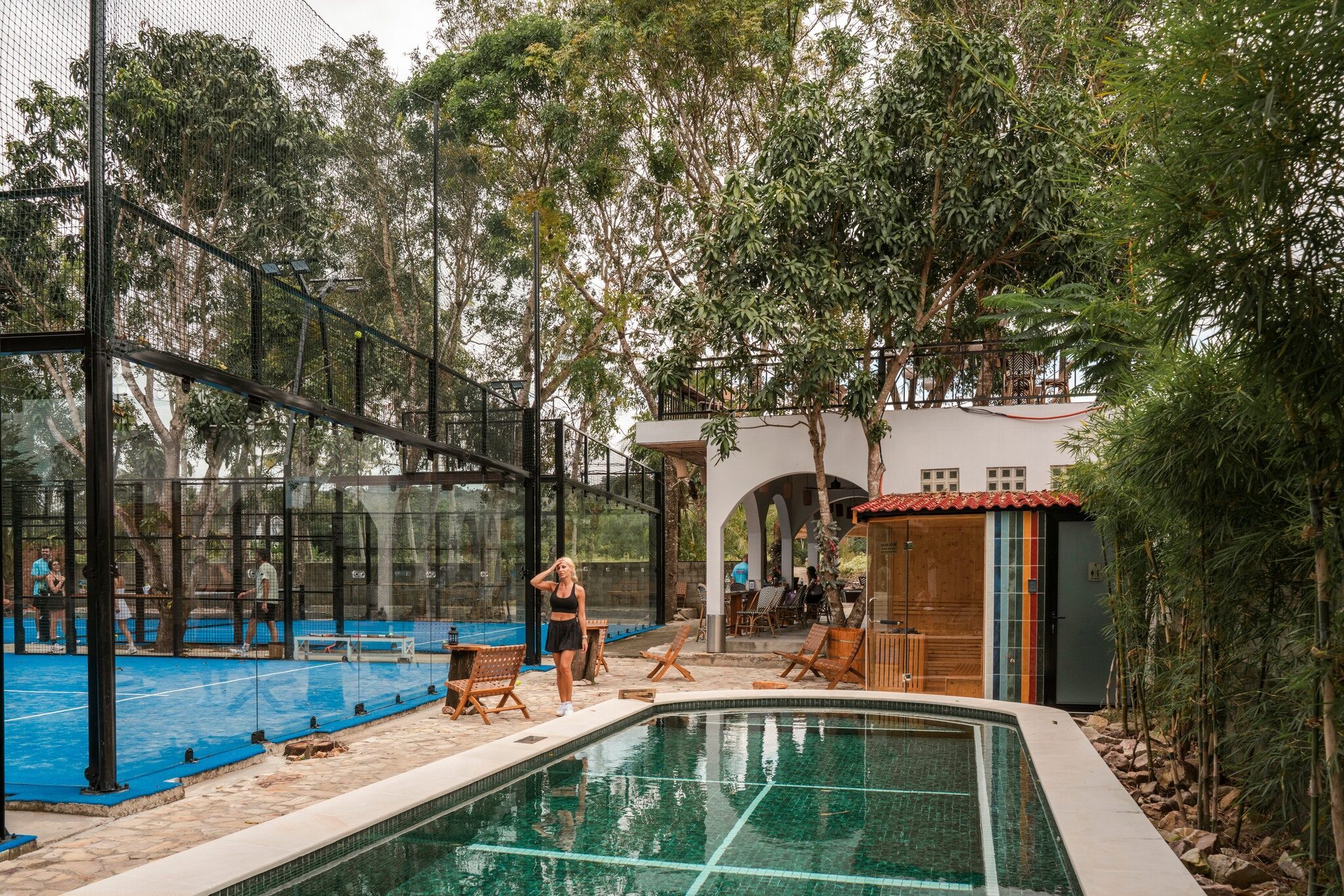
Padel is one of the best team-building sports because it’s easy to pick up, social, and welcoming to beginners. Doubles games bring colleagues onto the same small court, where bonding happens naturally. In Asia, company padel can range from a half-day session to a multi-day offsite, with coaching, friendly competition, wellness, and time together beyond the court.
Padel team building doesn’t need to mean taking your entire company abroad. An afternoon at a local club can give colleagues a welcome change of scene. Equally, padel can be the reason to bring everyone together for several days somewhere memorable, with good food, a comfortable stay and a programme that leaves people feeling they’ve had a break.
The starting point is what you want from the occasion: a reward, closer relationships, time for discussion or simply an enjoyable day together.
Why padel team building works
It connects people without feeling forced
A big reason we see people returning to padel is who they connect with. Conversation happens between points, partners encourage each other, and an ambitious shot can give everyone something to laugh about.
For company groups, that matters. Colleagues have something immediate to share, without needing a facilitator to manufacture a conversation. The bonding happens through the game.
Easy to get into and welcoming to beginners
Padel is extremely easy to get into. You don’t need to master every shot or understand every tactical decision to enjoy a first session.
A little coaching helps people get started, and keeping a rally going is motivating in itself. There’s enough happening to hold your attention, while still leaving room to talk. For those who take to it, the desire to play another game tends to follow quickly.
It shows a different side of colleagues
We like how padel takes the work feeling out of the moment. Someone quiet in meetings might become the most encouraging partner on court. Others discover a competitive streak nobody knew about.
It gives colleagues a shared memory beyond their usual responsibilities, and something to talk about when they’re back at work.
Why we’d choose padel over golf for most groups
For most company groups, padel would be our first choice over golf. Beginners and experienced players can share a small court and start interacting from the first session. Newcomers don’t need an established game to participate.
Golf can still sit alongside padel on a longer trip, particularly when colleagues already enjoy it. But for bringing a mixed group together, we think padel is the more accessible starting point.
Who company padel suits
- Employee wellness budgets: a way to put a wellness allowance towards an enjoyable shared activity.
- Leadership teams: time to reconnect, alongside restorative wellness days and discussions.
- Incentive and reward trips: something to look forward to, including for sales teams celebrating a strong year.
- Client days and offsites: a relaxed setting for spending time with clients away from the office.
- Company bonding: anything from a small team session to a larger employee escape.
If you’re comparing team-building activities, a local padel day can also be a straightforward way to introduce the sport before considering a trip abroad.
How big can the group be?
There is no fixed minimum. A leadership team of four can have a rewarding session together. At the other end, private hire at a suitable club can accommodate a company group of around 50, depending on the venue and programme.
Everyone doesn’t need to be on court simultaneously. At a club with five courts, twenty people could play while another twenty spend time in the café, function space or pool.
Look at how the whole group will spend its time. Suitable function rooms and café spaces can accommodate talks or meetings, while other facilities give colleagues somewhere appealing to go between games.
Mixing beginners and strong players
Different playing levels needn’t be a problem; the court serves as a natural divider for organising a group.
Beginners learn the basics together while stronger players have more demanding coaching or matches. Separate tournaments allow each group to enjoy competition at its own level.
Alternatively, mix people deliberately through a social format such as king/queen of the court, with staff managing rotations and pairings. The right approach depends on whether your priority is competitive games or getting colleagues to spend time together.
People sitting out should have good options too, whether that’s Pilates, yoga, a jacuzzi, a pool or somewhere comfortable for coffee.
More than courts: what a good club offers
We don’t list clubs that only have courts. For company groups, the surrounding facilities are part of what makes a venue work.
Across venues featured on PTA, facilities include infinity pools, sports bars, healthy cafés, exceptional dining, jacuzzis and Pilates studios. Some offer tennis or pickleball, with accommodation on site or nearby.
The combination varies. Ask which facilities your group can use, whether access is included and what needs reserving.
A good venue gives people somewhere they want to spend the afternoon, including colleagues who would prefer a short introduction to padel followed by lunch and a swim.
What to pair with padel on a company trip
Padel can be a big part of a company trip, perhaps the biggest, without it filling every day from morning to evening.
A padel retreat can include wellness days, golf, city tours and other racket sports. A working offsite might bring in meetings, mindset workshops, motivational speakers or team-bonding exercises. Shared meals and time to do nothing deserve space too.
In our view, the best padel travel organisers go well beyond the court, offering the breadth of service you’d expect from a good travel agency. Establish who arranges accommodation, transport and activities so the whole trip is accounted for.
The best destinations in Asia for a company padel trip
Our recommendations depend on the kind of occasion you have in mind.
| Destination | Why we’d consider it | Best for |
|---|---|---|
| Bangkok | Why we’d consider itOur first choice for connectivity and a three- to four-day stay | Best forCity offsites and shorter trips |
| Phuket and Koh Samui | Why we’d consider itThailand’s beach options | Best forRelaxed team trips |
| Bali | Why we’d consider itOne of our strongest current choices for a higher-value trip | Best forWellness, incentive and leadership trips |
| Maldives | Why we’d consider itSeclusion and time together | Best forExecutive retreats, especially for teams travelling from Dubai |
| Langkawi, Phu Quoc and Hoi An | Why we’d consider itAlternatives to more familiar offsite destinations | Best forRepeat company trips |
Bangkok for connectivity
Bangkok is a natural starting point when connectivity matters. It has great energy and gives a short company trip plenty of life beyond padel, from shared dinners to exploring the city. Padel trips here typically consist of three or four days. For a city-based offsite in Thailand, it’s a first suggestion.
Phuket and Koh Samui for beach time
Thailand is a strong all-round recommendation, with Phuket and Koh Samui appealing when a company wants a beach stay.
They suit a relaxed rhythm of padel, shared meals and time by the water. Choose accommodation close to the club, so journeys don’t take over the day.
Bali for higher-value team trips
For team building in Bali, consider wellness and the wider stay alongside padel from the outset.
Bali is well suited when a company wants to invest more in the overall experience, appealing for leadership breaks and incentive trips where accommodation, dining and activities matter as much as the sessions themselves.
The Maldives for secluded executive retreats
Consider the Maldives for smaller executive groups looking for a luxury stay with privacy, particularly teams travelling from Dubai.
The appeal is spending several days together at one resort, with accommodation, dining, padel and meeting facilities all in one place. Check the resort’s court access and corporate facilities before choosing your stay.
Further afield
Langkawi in Malaysia is an overlooked option, although connections need closer consideration.
Phu Quoc and Hoi An are also worth exploring for companies looking for somewhere different for their next offsite.
Planning padel for your team? Share your group size, dates and destination, and we’ll connect you with a trusted partner club or organiser.
What goes wrong with company padel and how to avoid it
The biggest mistake is overlooking different needs. Check playing experience, accessibility requirements, and activity preferences before agreeing to the programme.
Another is leaving no time off court. We see padel as a gateway, just part of the day. Choose an organiser who can arrange the rest, or make those arrangements within your company.
Long journeys through traffic can undo an otherwise good plan. Stay close to the club, particularly when you’re playing on several days.
An overfilled itinerary creates its own problem: people never get to unwind. Leave a spare block of time. It can be exactly what the group needs.
Choose clubs experienced with larger corporate days. Those are the clubs we work with, drawing on our expertise in the padel industry in Asia.
What drives the cost
The overall level of luxury influences cost more than the padel itself. Accommodation, dining, private spaces and the wider programme all shape the quote.
A bigger group isn’t necessarily more expensive per person. Private hire can bring the per-person cost down, depending on the arrangements.
The partner club or organiser quotes for your group and confirms exactly what’s included.
How to book a corporate padel trip in Asia
Find the right setting for your team with Padel Travel Asia. Our regional expertise and relationships with trusted clubs, coaches and travel organisers give you access to a range of providers, whether you’re planning a company padel day or a multi-day retreat.
Tell us your group size, preferred dates and destination, and we’ll connect you with a partner who can shape the programme and provide a quote. They’ll reply directly to discuss the arrangements.
FAQs
Is padel good for team building?
Yes. We find its accessible introduction, doubles format, and natural conversation make it especially suitable for bringing colleagues together.
Do people need to have played before?
No. Beginner coaching and an introduction to the rules can give first-timers the confidence to join organised games.
How long should a company padel session or trip be?
A half-day works for an introduction. Choose a full day or several days if you also want meals, meetings, wellness or a wider offsite.
What else can a group do besides padel?
Options include wellness, golf, sightseeing, workshops, meetings, and other racket sports, alongside meals and free time.
What’s the best destination in Asia for a company padel trip?
Our starting point is Thailand: Bangkok for a city offsite, or Phuket and Koh Samui for a beach trip. Bali suits wellness-led stays, while the Maldives appeals for secluded executive retreats.
How much does it cost?
The accommodation standard and wider programme drive the budget. The partner club or organiser provides a group quote based on your requirements.
Does PTA organise corporate padel events?
No. PTA connects company groups with trusted partner clubs and organisers, who plan the event or trip and provide the quote.